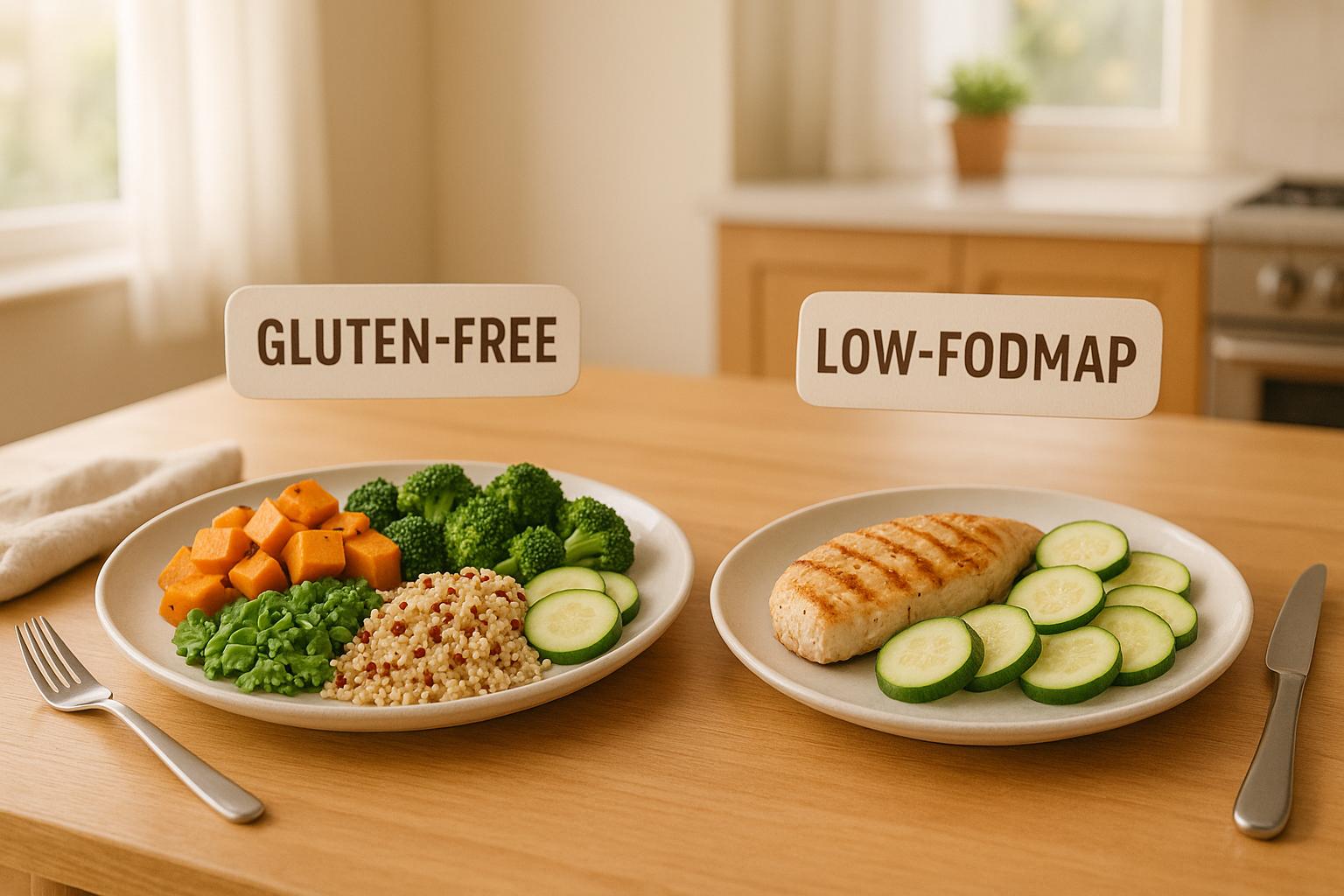

Struggling with IBS symptoms? Choosing the right diet can make a big difference. Here’s the bottom line:
- Low-FODMAP Diet: Proven to help up to 75% of IBS sufferers by targeting hard-to-digest carbs that trigger symptoms like bloating, cramping, and irregular bowel movements.
- Gluten-Free Diet: Effective for those with celiac disease or gluten sensitivity, but its benefits for IBS are less clear. Often, relief comes from reducing FODMAPs (like fructans in wheat), not gluten itself.
Quick Comparison
| Diet | What It Targets | Effectiveness for IBS | Challenges |
|---|---|---|---|
| Low-FODMAP | FODMAPs (fermentable carbs) | Up to 75% symptom relief | Complex, requires tracking and reintroduction |
| Gluten-Free | Gluten (protein in wheat, rye, barley) | Limited for IBS relief | Costly, may lack nutrients |
Key Takeaway: The low-FODMAP diet is generally more effective for IBS, but working with a dietitian is crucial to find what works best for you. Start with the low-FODMAP approach, and consider gluten-free only if gluten sensitivity or celiac disease is confirmed.
What is the low-FODMAP diet, and should you try it? | Dr Will Bulsiewicz
The Gluten-Free Diet for IBS
A gluten-free diet has gained attention as a way to manage IBS symptoms, though the benefits may stem more from reducing fructans – found in many gluten-containing foods – than gluten itself. Let’s break down what this diet involves, its potential effects on IBS symptoms, and the gluten-free options available in the U.S.
What is a Gluten-Free Diet?
Originally developed for people with celiac disease, this diet eliminates gluten, a protein in wheat, rye, and barley. Interestingly, for some IBS patients, the issue may not be gluten itself but fructans – a type of fermentable carbohydrate found in these grains. Research increasingly shows that fructans can trigger IBS symptoms, making the removal of gluten-containing foods indirectly beneficial for some individuals.
How Well Does a Gluten-Free Diet Work for IBS?
The effectiveness of a gluten-free diet for IBS varies, but some studies show promising results for symptom relief. Improvements in abdominal pain, stool consistency, and fatigue have been reported. In one randomized controlled trial, participants who reintroduced gluten experienced worse symptoms – like pain, bloating, and irregular stools – compared to those on a placebo. Notably, 68% of those on the gluten-containing diet felt their symptoms were poorly managed, versus 40% in the placebo group.
A 2011 study by Biesiekierski and colleagues further highlighted this connection. Among 34 IBS patients on a gluten-free diet, symptoms like pain and bloating worsened when gluten was reintroduced. More recent findings suggest that individuals with diarrhea-predominant IBS may see improvements – such as fewer loose stools and better stool consistency – within just two weeks of starting a gluten-free regimen. These insights emphasize the potential of personalized dietary strategies for managing IBS.
Common Gluten-Free Foods in the U.S.
Following a gluten-free diet doesn’t mean sacrificing variety. Plenty of naturally gluten-free foods are available, including:
- Fruits and vegetables
- Meat, poultry, fish, and seafood
- Dairy products
- Beans, legumes, and nuts
For grains, options like quinoa, rice, buckwheat, millet, and gluten-free oats provide excellent alternatives to wheat-based products. Other choices include amaranth, cassava, teff, and sorghum – all of which are naturally free of gluten.
"The most cost-effective and healthy way to follow the gluten-free diet is to seek out these naturally gluten-free food groups…" – Celiac Disease Foundation
In addition to these staples, gluten-free versions of pasta, bread, and crackers are widely available in U.S. grocery stores. However, it’s crucial to check labels carefully – some processed foods, like soups or sauces, may contain hidden gluten (e.g., wheat as a thickener). The FDA ensures that products labeled as "gluten-free" meet strict safety standards, but vigilance remains key, especially for people with celiac disease.
Processed fruits, vegetables, and even spices can sometimes include gluten-containing additives, so sticking to fresh or single-ingredient products is a safer choice. For those worried about cross-contamination, grains tested to contain less than 20 parts per million (ppm) of gluten can offer extra peace of mind. While IBS patients may not need to be as strict as those with celiac disease, these precautions can still make a difference when exploring dietary options for symptom management.
The Low-FODMAP Diet for IBS
The low-FODMAP diet focuses on reducing a variety of carbohydrates (known as FODMAPs – short-chain sugars and fibers found in many common foods) that can cause digestive issues. Unlike diets that target a single nutrient, this approach addresses a broader group of potential triggers.
What is the Low-FODMAP Diet?
FODMAP stands for Fermentable Oligosaccharides, Disaccharides, Monosaccharides, and Polyols. These are carbohydrates that, when they reach the large intestine, are fermented by gut bacteria. This process can produce gas, leading to symptoms like cramping, bloating, and irregular bowel movements. The low-FODMAP diet is often used as an elimination plan to help people with functional gastrointestinal disorders identify their specific food triggers. As Dr. Hazel Galon Veloso, a gastroenterologist at Johns Hopkins, explains:
"The low FODMAP diet is a temporary eating plan that’s very restrictive… It’s a short discovery process to determine what foods are troublesome for you."
This diet isn’t designed for weight loss. Its primary goal is to manage IBS symptoms and uncover individual food sensitivities.
How Well Does the Low-FODMAP Diet Work for IBS?
Research shows that the low-FODMAP diet can be quite effective. Studies from Monash University report that three out of four individuals with IBS experience symptom relief on this diet. Other research has shown symptom improvement in up to 86% of people with IBS or small intestinal bacterial overgrowth (SIBO). These findings highlight the diet’s potential for many patients.
A 2023 meta-analysis revealed that the low-FODMAP diet significantly reduced IBS severity scores and improved quality of life, outperforming the gluten-free diet in effectiveness. However, in one randomized trial, 42% of participants following traditional dietary advice saw symptom improvement, compared to 55% on the low-FODMAP diet and 58% on a gluten-free diet. The differences weren’t statistically significant, but researchers noted that traditional dietary advice might be easier to follow and more affordable.
Next, let’s break down the three-phase process that makes this diet both systematic and personalized.
3 Steps of the Low-FODMAP Diet
The low-FODMAP diet is structured into three phases: elimination, reintroduction, and personalization.
Phase 1: Elimination
In this phase, you cut out all high-FODMAP foods for two to six weeks. This helps to reduce symptoms by minimizing bacterial fermentation in the gut. Foods like wheat, onions, garlic, and dairy containing lactose are common triggers that are avoided during this time.
Phase 2: Reintroduction
Once symptoms have improved, high-FODMAP foods are reintroduced gradually – one at a time, every three days. This step helps identify which foods cause issues. As Dr. Veloso explains:
"Then every three days, you can add a high FODMAP food back into your diet, one at a time, to see if it causes any symptoms. If a particular high FODMAP food causes symptoms, then avoid this long term."
Phase 3: Personalization
The final step involves tailoring your diet to your specific needs. You’ll stick to foods that your body tolerates well and avoid those that trigger symptoms. Since your tolerance to FODMAPs can change over time, periodic re-testing of certain foods might be necessary. Because this process can be complex, working with a registered dietitian is highly recommended.
Key Differences and Overlap Between the Diets
Now that we’ve explored the basics of each diet, let’s dive into a side-by-side comparison of their food rules and how they tackle IBS symptoms. While both aim to ease IBS discomfort, they focus on entirely different triggers.
Food Restrictions and Allowed Foods Comparison
The gluten-free diet cuts out gluten – a protein found in wheat, rye, and barley. On the other hand, the low-FODMAP diet is all about limiting specific carbohydrates that can irritate the gut.
Interestingly, some foods fit into one diet but not the other. For example, certain gluten-containing foods like Alpine Breads Spelt Sourdough (two slices) or small portions of pretzels are low in FODMAPs and might be allowed on a low-FODMAP diet. Meanwhile, many gluten-free items, such as soy flour, coconut flour, honey, dried fruits (like dates and mango), and legumes, are high in FODMAPs and would be off-limits for someone following that plan.
For low-FODMAP-friendly options, you’re looking at foods like almond milk, lactose-free dairy, hard cheeses, bananas, blueberries, carrots, potatoes, beef, chicken, fish, eggs, and gluten-free grains like quinoa and white rice. However, high-FODMAP foods to avoid include apples, mangos, regular dairy milk, wheat, rye, onions, garlic, beans, and sugar alcohols.
It’s worth noting that grains containing gluten – like wheat and rye – are also high in FODMAPs. This overlap might explain why some people feel better on a gluten-free diet; they’re unintentionally cutting back on FODMAPs, too.
Symptom Relief Effectiveness
When it comes to symptom relief, the two diets don’t perform equally. A systematic review found there isn’t enough evidence to strongly recommend a gluten-free diet for IBS relief. In contrast, there’s some evidence – though of low quality – that the low-FODMAP diet can be effective. Clinical studies suggest that about 75% of IBS sufferers see improvements with the low-FODMAP diet.
Interestingly, combining the two diets might yield even better results. A pilot study found that a dual approach – low-FODMAP and gluten-free – reduced bloating by 58% and pain by 42%. While more research is needed, this combination shows promise for those struggling to manage their symptoms with just one diet.
Practical Challenges of Each Diet
Even though both diets can help manage IBS, sticking to them in real life is no small feat. Each comes with its own set of challenges, from grocery shopping to dining out.
The low-FODMAP diet, for instance, requires a lot of label reading, which can be time-consuming. While 60% of people following the diet say it’s manageable, only 44% find it easy to integrate into their daily routines. The cost of specialized low-FODMAP products and concerns about altering gut bacteria add to the complexity.
The gluten-free diet isn’t a walk in the park either. Gluten-free products are often pricey and may lack variety and essential nutrients. Many of these foods are low in fiber and key vitamins, making it harder to maintain a balanced diet. To put things into perspective, the gluten-free food market was valued at $11.6 billion in 2015.
Both diets also make social situations like dining out a challenge. And let’s not forget the difficulty of accessing dietitians or nutritionists in some healthcare systems, which can make navigating these diets even tougher.
sbb-itb-f98f348
Which Diet Works Better for IBS Relief?
Studies reveal that the low-FODMAP diet is more effective than the gluten-free diet in alleviating IBS symptoms, providing greater relief for most individuals.
Research Findings on IBS Diets
A detailed meta-analysis found that a gluten-free diet did not significantly reduce overall IBS symptoms (SMD −0.31; 95% CI −0.92, 0.31), bloating (SMD −0.37; 95% CI −1.03, 0.30), or quality of life (SMD −0.12; 95% CI −0.64, 0.39). However, there was a slight improvement in abdominal pain (SMD −0.68; 95% CI −1.36, −0.00). On the other hand, the same analysis showed that the low-FODMAP diet significantly reduced IBS severity scores (SMD 0.66; 95% CI 0.31, 1.01) and improved quality of life (SMD −0.36; 95% CI −0.70, −0.01).
Further research highlights that between 50% and 72% of IBS sufferers report symptom improvement on the low-FODMAP diet, with some studies noting success rates as high as 86%, particularly among those with IBS and small intestinal bacterial overgrowth (SIBO). One study concluded that the gluten-free diet lacks the efficacy to be widely recommended for IBS patients, with much of its perceived benefit likely stemming from reduced fructans – FODMAPs found in wheat – rather than gluten removal itself. Supporting this, a 2017 Norwegian study of 59 participants with suspected gluten intolerance found that severe reactions were twice as likely to be triggered by fructans rather than gluten.
These findings stress the importance of tailoring dietary strategies to individual needs.
When to Consider a Gluten-Free Diet
While the low-FODMAP diet often outperforms the gluten-free diet, there are specific cases where avoiding gluten is necessary. Gluten-free diets are crucial for those diagnosed with celiac disease or a wheat allergy. They may also benefit individuals with non-celiac gluten sensitivity, which affects about one-third of people with IBS. If gluten intolerance is suspected, testing for celiac disease is highly recommended. Interestingly, another study suggested that gluten itself may not significantly impact IBS symptoms, though individual responses can vary.
Given these complexities, working with a professional can help identify the best approach for each person.
Working with a Professional
Navigating restrictive diets like the low-FODMAP or gluten-free diet can be challenging, making professional guidance essential. The American College of Gastroenterology advises consulting a dietitian when starting a low-FODMAP diet. Dr. Hazel Galon Veloso, a gastroenterologist at Johns Hopkins, explains:
"The low FODMAP diet is a temporary eating plan that’s very restrictive. It’s always good to talk to your doctor before starting a new diet, but especially with the low FODMAP diet since it eliminates so many foods – it’s not a diet anyone should follow for long. It’s a short discovery process to determine what foods are troublesome for you."
For some, combining elements of both diets may offer additional benefits, though this requires careful monitoring to prevent nutritional deficiencies and over-restriction. Ultimately, a personalized approach ensures the best outcomes, aligning with the broader evidence that while the low-FODMAP diet is generally more effective, individual circumstances may call for a tailored gluten-free plan or a combined strategy.
Conclusion: Finding the Right Diet for IBS
Deciding between a gluten-free diet and a low-FODMAP approach for managing IBS symptoms depends largely on identifying your personal triggers and working with knowledgeable professionals. Studies suggest that the low-FODMAP diet tends to provide more effective symptom relief for most IBS patients compared to a gluten-free diet.
For individuals with celiac disease or non-celiac gluten sensitivity, avoiding gluten is absolutely essential. However, for many others, strict gluten elimination may not be necessary.
Enlisting the help of a qualified dietitian can make a significant difference. They can guide you through the three-phase low-FODMAP process, ensuring your diet remains nutritionally balanced while helping you pinpoint specific triggers without imposing unnecessary restrictions. This professional support not only customizes your dietary plan but also lays the groundwork for lasting relief.
With IBS affecting an estimated 10–20% of the global population, it’s important to remember you’re not alone. Exploring options like spelt sourdough bread to determine if fructans are a trigger or following a structured elimination diet can help you discover a tailored approach that works best for your body.
For practical advice and science-based insights into managing gut health, resources like DigestiveBoost offer valuable information on dietary strategies, probiotics, digestive enzymes, and tips to improve your digestive wellness. Combining expert guidance with dependable educational tools can make a real difference in achieving long-term relief and enhancing your quality of life.
While finding the right diet involves some trial and error, with the right support and resources, you can create a sustainable, personalized plan to manage IBS effectively.
FAQs
What’s the difference between a low-FODMAP diet and a gluten-free diet for managing IBS symptoms?
The low-FODMAP diet and the gluten-free diet take different approaches when it comes to managing IBS symptoms. The low-FODMAP diet focuses on cutting back on specific short-chain carbohydrates – like fermentable oligosaccharides, disaccharides, monosaccharides, and polyols – that can lead to bloating, gas, and abdominal pain in people with IBS. This approach aims to address a broad spectrum of carbohydrate triggers.
In contrast, the gluten-free diet eliminates gluten, a protein found in wheat, barley, and rye. While this diet is essential for individuals with celiac disease or gluten sensitivity, it doesn’t cover all FODMAPs. Some foods with gluten are high in FODMAPs, but others are not, making the gluten-free diet less effective for tackling the variety of triggers associated with IBS.
Ultimately, the low-FODMAP diet offers a more comprehensive approach to managing IBS triggers, while the gluten-free diet is specifically targeted at gluten-related conditions. For tailored advice, it’s best to consult a healthcare provider or dietitian.
How can I figure out if my IBS symptoms are triggered by gluten or FODMAPs, and should I try cutting both out of my diet?
Is It Gluten or FODMAPs Triggering Your IBS?
Figuring out whether gluten or FODMAPs are behind your IBS symptoms often means trying a structured elimination diet. This process involves cutting out specific foods temporarily and then reintroducing them one by one to observe how your body responds. Since IBS symptoms can sometimes mimic those of gluten sensitivity or even celiac disease, it might also be worthwhile to consult a healthcare provider for testing.
For some, avoiding high-FODMAP foods brings noticeable relief, while others find they need to cut back on gluten as well. Because digestive triggers vary from person to person, working with a dietitian or healthcare professional can help you develop a tailored plan that suits your needs.
What makes following a low-FODMAP diet challenging, and how can a dietitian help manage these difficulties?
Following a low-FODMAP diet can feel daunting because of its restrictive nature. It often limits key nutrients like fiber, calcium, iron, and B12, and may even affect your gut microbiota. Balancing these dietary changes while ensuring proper nutrition can be a real challenge.
This is where a dietitian can make a big difference. They can customize the diet to fit your specific needs, help you meet essential nutritional goals, and guide you through the reintroduction phase to pinpoint which foods trigger symptoms. With their guidance, you can manage the diet more confidently while keeping your health on track.