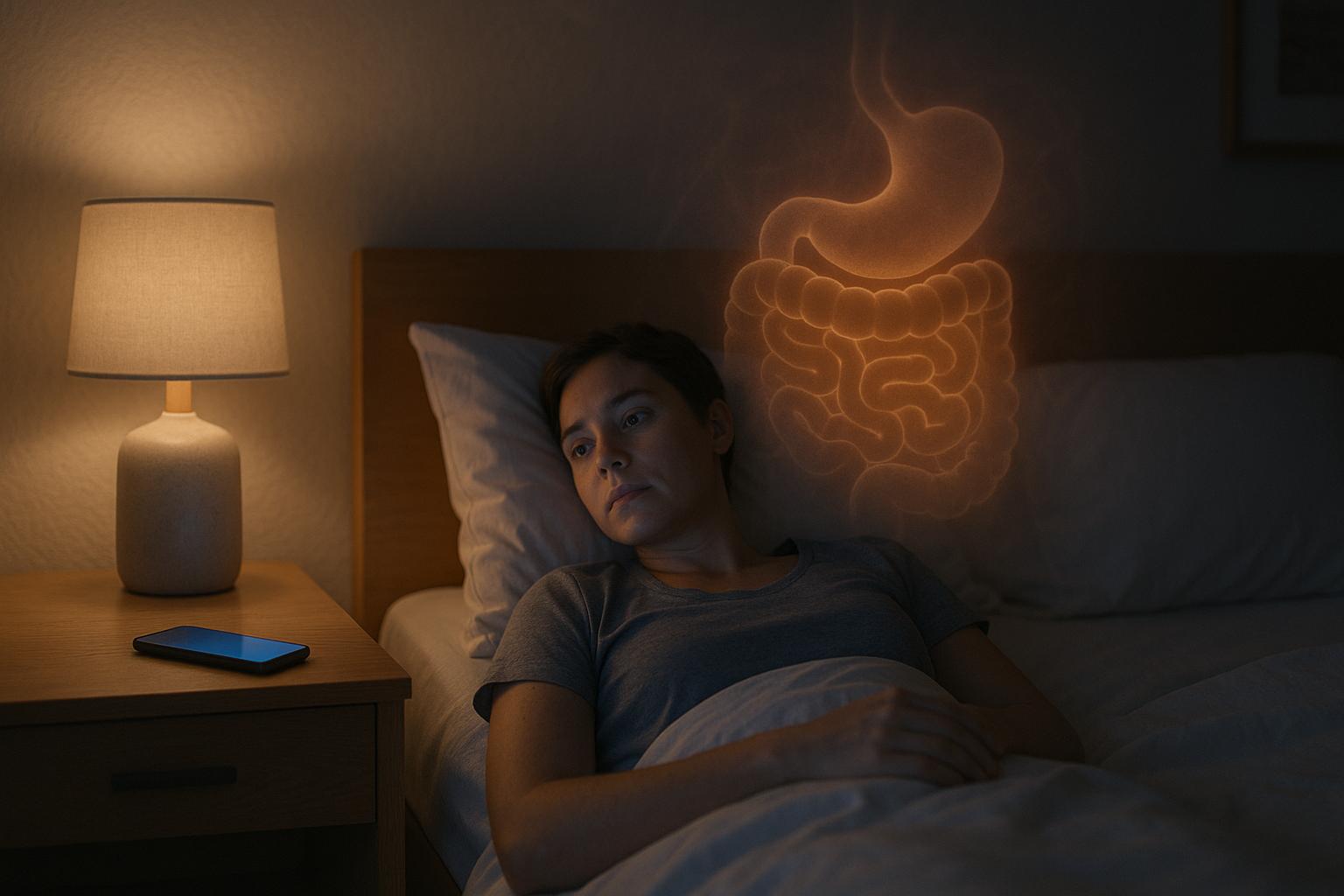

Yes, blue light can negatively affect gut health. Research shows that exposure to blue light, especially at night, disrupts your circadian rhythm, which impacts digestion and gut bacteria. Here’s what you need to know:
- Blue light suppresses melatonin, delaying sleep and throwing off your internal clock.
- Poor sleep impacts gut bacteria, reducing beneficial microbes and increasing inflammation.
- Studies on mice show blue light alters gut microbiota, potentially leading to metabolic issues.
Quick Tips to Protect Your Gut:
- Limit screen time 2–3 hours before bed.
- Use blue light filters or glasses in the evening.
- Maintain a consistent sleep schedule.
- Eat a fiber-rich diet and include fermented foods.
Managing blue light exposure can improve both sleep and gut health. Keep reading for more details on how blue light affects digestion and what you can do to counter it.
The Secret to Deep Sleep: Hydration, Gut Health & Blue Light Hacks! Sam Tejada x Fox 26
What Is Blue Light and Where Does It Come From
Blue light is a type of high-energy visible light with wavelengths ranging from 380 to 500 nanometers. Because it carries more energy than longer wavelengths, it has a greater potential to affect natural processes in the body.
Our eyes aren’t very good at filtering blue light, which means more of it reaches the retina. This can interfere with essential biological functions, like digestion and regulating sleep cycles.
Dr. Christian Lappe, an expert at ZEISS, explains:
"Blue light represents the part of the visible spectrum with the shortest wavelength between 380 and 500 nanometers and is a major component of our daylight. So, the natural source of blue light is the sun, but we are increasingly exposed to artificial light sources used indoors such as LED technology or all the displays, screens and smartphones that surround us."
This highlights why understanding blue light exposure is so relevant in today’s world.
Common Blue Light Sources in Daily Life
Blue light exposure comes from both natural and artificial sources. While sunlight is the primary source during the day, artificial light dominates once the sun goes down.
Digital devices are a leading source of blue light in modern life. Smartphones, tablets, laptops, and gaming consoles all emit blue light in the 400 to 490 nanometer range. Research has shown that popular Apple devices, for instance, emit peak blue light between 445 and 455 nanometers.
LED lighting is another major contributor. Most LED lights emit blue light in the 400 to 490 nanometer range, with many peaking between 435 and 440 nanometers. This includes LED televisions, computer monitors, and the energy-efficient LED bulbs now widely used in homes and offices. Other artificial sources, like fluorescent lights, compact fluorescent lamps (CFLs), and flat-screen TVs, also add to the blue light we encounter daily.
Why Blue Light Exposure Has Gone Up
Our exposure to blue light has increased significantly, thanks to two major shifts: the widespread use of artificial lighting to extend our evenings and the explosion of digital devices that concentrate blue light into our daily routines.
Here’s a striking statistic: 80% of American adults spend more than two hours a day using digital devices, and nearly 67% use two or more devices at the same time. This multi-device usage – like scrolling on your phone while working on your laptop – can effectively double your exposure.
This isn’t just a concern for younger generations. While teens and kids are logging more screen time, older adults (60 and up) now spend over four hours a day using TVs, computers, tablets, and other devices. That’s about 30 minutes more per day than a decade ago.
The rise of LED technology has also played a big role. By 2019, nearly half of all light sources worldwide were LED, and projections suggest that this number will jump to over 87% by 2030. Since LEDs emit more blue light than traditional bulbs, this shift has added to the overall exposure.
The impact of this trend is clear: 59% of American adults now report symptoms of digital eye strain. Beyond eye strain, increased blue light exposure is also linked to disrupted sleep patterns, which can have ripple effects on gut health. This growing exposure sets the stage for exploring how blue light affects sleep and digestion.
How Blue Light Disrupts Sleep Cycles and Affects Your Gut
Blue light has a way of throwing off your sleep schedule – and when your sleep suffers, so does your digestion. It can alter enzyme production and upset the balance of your gut microbiome.
How Sleep Cycles Control Digestion
Your circadian rhythm isn’t just about sleep; it’s also the clock that keeps your digestion running smoothly. It regulates enzyme production, nutrient absorption, and even gut bacteria. Interestingly, your gut has its own rhythm, playing a major role in serotonin production – about 90% of the body’s supply. Serotonin is key because it’s a precursor to melatonin, the hormone that helps you sleep. Even a small amount of sleep loss can reduce beneficial gut bacteria and short-chain fatty acids (SCFAs), which are essential for gut health and inflammation control.
Dr. Carleara Weiss, PhD, MS, RN, explains the connection between sleep and the gut:
"The gut microbiome can influence sleep quality through the brain-gut-microbiome axis (BGMA). This is a bi-directional relationship, so sleep and stress also impact the gut."
It doesn’t take much to disrupt this delicate balance. Just two nights of poor sleep can decrease SCFAs and start altering the gut microbiome. This sets the stage for blue light to make things even worse by interfering with your circadian rhythm.
How Blue Light Throws Off Your Internal Clock
Blue light exposure in the evening is a major sleep disruptor. It suppresses melatonin – the hormone that signals your body it’s time to sleep – twice as much as green light does. In fact, it can shift your circadian rhythm by as much as three hours. Maureen Salamon from WebMD sums it up:
"More so than any other color, blue light messes with your body’s ability to prepare for sleep because it blocks a hormone called melatonin that makes you sleepy."
Harvard Health backs this up:
"While light of any kind can suppress the secretion of melatonin, blue light at night does so more powerfully."
The problem? Evening screen time is so common that it’s practically a habit for many people. Matt Gratton from the University of Kansas and Children’s Mercy Hospital explains:
"Exposure to blue light at bedtime can trick our bodies into slowing the release of melatonin."
When melatonin release is delayed, you don’t just feel groggy the next day. Poor sleep can disrupt your gut microbiome, reducing beneficial bacteria and increasing inflammatory compounds. This can lead to issues like increased intestinal permeability. Even just two nights of sleeping only four hours can significantly lower your body’s insulin sensitivity compared to getting a full night’s rest. Jaycee Waters puts it into perspective:
"When your rhythm is in tune, you’re like a well-oiled machine; when it’s off, well, even the best machines can sputter."
Research on Blue Light and Gut Bacteria Changes
Recent studies suggest that prolonged exposure to blue light may disrupt gut microbiota, potentially leading to inflammation. Animal research points to changes in the composition and diversity of gut bacteria caused by chronic blue light exposure – factors that could contribute to digestive issues and inflammatory responses.
What Animal Studies Show
Animal studies have provided valuable insights into how blue light might influence gut health. For example, research on male C57BL/6 mice exposed to high-intensity blue LED light (7.2 J/cm²) over 33 weeks revealed a significant reduction in the α-diversity of their fecal microbiota (p = 0.007 and 0.013). Reduced α-diversity is often linked to conditions like obesity, diabetes, and colorectal cancer. The same study also found that blue light exposure raised serum total cholesterol levels and highlighted an inverse relationship between the ratio of beneficial to harmful gut bacteria and cholesterol levels.
Interestingly, not all findings are consistent across species. A study on chicks exposed to 480 nm blue light showed increased diversity and richness in their jejunal microbiota. This exposure promoted the growth of beneficial bacteria such as Faecalibacterium and Ruminiclostridium_9, which are associated with higher butyrate production – a compound beneficial for gut health. These contrasting results highlight the complexity of blue light’s effects on gut microbiota, which may vary significantly between species.
These findings in animals pave the way for exploring whether similar effects occur in humans.
Human Studies: Current Findings
Research directly examining blue light’s effects on human gut microbiota is still in its early stages. Most studies have focused on broader issues, such as artificial light exposure and its impact on circadian rhythms. For instance, disruptions caused by night shift work or artificial light at night (ALAN) have been linked to an increased risk of metabolic disorders and cardiovascular disease. Since the gut microbiome, circadian rhythms, and metabolic systems are intricately connected, it’s plausible that blue light exposure could indirectly influence gut health by disrupting sleep-wake cycles.
Some research has also identified links between gut bacteria and specific health conditions. For example, individuals with age-related macular degeneration (AMD) show distinct gut bacterial profiles. These patients tend to have higher levels of bacteria like Anaerotruncus, Oscillibacter, Ruminococcus torques, and Eubacterium ventriosum, along with lower concentrations of Firmicutes and higher levels of Proteobacteria and Bacteroidota, compared to healthy individuals.
While human studies are limited, the evidence from animal research suggests that blue light may influence gut microbiota composition, potentially increasing the risk of inflammatory and metabolic disorders. Further investigation is needed to fully understand these connections and their implications for human health.
sbb-itb-f98f348
How to Reduce Blue Light Exposure for Better Gut Health
Research is still uncovering the connection between blue light and gut health, but there are steps you can take now to improve both your sleep and digestion. On average, Americans spend 7 hours and 4 minutes daily in front of screens, with more than half using devices in the hour before bed. Making small changes to reduce blue light exposure can help protect your sleep cycle and support a healthy gut.
Limit Screen Time and Use Blue Light Filters
Cut down on screen use at night. Studies reveal that just one hour of screen time before bed increases the likelihood of insomnia by 59% and shortens sleep by 24 minutes. To counter this, set a nightly cutoff for using electronic devices – ideally two to three hours before bedtime.
"The light from our screens can delay our transition to sleep, even if we are engaged in some soothing activity online."
– Joanna Cooper, M.D., Neurologist and Sleep Medicine Specialist with Sutter
If you need to use devices in the evening, enable blue light filters or night mode. These settings shift screen colors to warmer tones, reducing blue light output. You can also install apps that filter out blue and green wavelengths at night.
Another option is blue-light-blocking glasses, which can help protect your sleep and gut rhythms. A two-week study found that participants who wore these glasses for three hours before bed experienced noticeable improvements in both sleep quality and mood compared to those using regular glasses. These glasses typically cost up to $80.
During the day, try the 20/20/20 rule to reduce eye strain: every 20 minutes, look at something 20 feet away for 20 seconds. This simple habit can help offset the strain from prolonged screen time.
Build a Gut-Friendly Evening Routine
Creating a calming evening routine can help regulate your sleep-wake cycle and support your gut health. Start by dimming the lights as bedtime approaches and using warm lighting in your bedroom or relaxation areas.
"Until the advent of artificial lighting, the sun was the major source of lighting, and people spent their evenings in (relative) darkness."
– Harvard Health Publishing
Using dim red lights for night lighting can also help, as red light is less likely to interfere with your body’s production of melatonin. Removing electronic devices from the bedroom can create a dark, quiet, and cool space that’s better for sleep. Aim to keep a consistent sleep schedule, going to bed and waking up at the same time every day – even on weekends. Adults aged 18 to 64 need seven to nine hours of sleep per night for overall health.
In the morning, expose yourself to natural sunlight to help reset your internal clock, which can improve your sleep quality at night.
Add Other Gut Health Practices
Reducing blue light exposure is just one piece of the puzzle. Pair it with other habits that promote a healthy gut.
Start with a fiber-rich diet that includes plenty of protein and fermented foods like yogurt, kefir, and sauerkraut to encourage good gut bacteria. Stay hydrated throughout the day, and avoid stimulants like caffeine and alcohol in the evening, as they can disrupt both digestion and sleep.
Exercise is another key factor. As interventional gastroenterologist Lance Uradomo, M.D., M.P.H., points out:
"Even a 10‑minute walk improves digestion… Exercise increases blood flow to the muscles in the digestive system and helps move food through the digestive tract."
Managing stress is equally important, as chronic stress can harm your gut microbiome and lead to inflammation. Consider adding relaxation techniques like deep breathing, meditation, or gentle stretching to your evening routine.
For additional support, you might try digestive enzymes and probiotics, especially if you’ve experienced digestive issues or are working to rebalance your gut after periods of poor sleep or stress. These supplements can help maintain healthy gut function and support overall wellness.
The Growing Link Between Blue Light and Gut Health
New research is shedding light on how blue light exposure might impact gut health. A 2024 study on male mice found that prolonged exposure to blue LED light caused noticeable changes in gut bacteria. Specifically, high-intensity blue light (7.2 J/cm²) led to a reduction in gut microbiota diversity. This exposure also influenced cholesterol metabolism by disrupting the balance of gut bacteria. These findings add to earlier studies that have linked blue light to circadian rhythm disturbances, which in turn can affect gut health.
Chronic exposure to blue light from LEDs may interfere with the natural balance of gut bacteria and circadian rhythms, potentially leading to metabolic issues. Given how much blue light we encounter in modern environments – from screens to artificial lighting – avoiding it completely is almost impossible.
Timing also plays a critical role here. Gut bacteria operate on a daily rhythm that aligns with our sleep-wake cycle. When this rhythm is thrown off, digestion and other gut functions can suffer. This highlights the importance of managing exposure, especially during evening hours.
Although human studies in this area are still in their early stages, findings from animal research suggest it’s worth taking preventive measures. Reducing screen time at night, using blue light filters, and maintaining gut-friendly habits can do more than just improve your sleep – they may also help preserve the delicate connection between your circadian rhythms and gut microbiota.
As research continues to evolve, staying informed can help you make smarter choices about your digital habits. The evidence is mounting: light has a profound influence on human biology, particularly when it comes to circadian rhythms and overall health.
FAQs
Can blue light exposure at night affect gut health and microbiota diversity?
Research indicates that nighttime exposure to blue light can have a negative impact on gut health. Specifically, it has been shown to lower the alpha diversity of gut microbiota – an essential factor for maintaining a balanced and healthy digestive system. When gut bacteria diversity decreases, it can lead to gut dysbiosis, a condition associated with inflammation and other health complications.
Moreover, blue light at night can interfere with the natural rhythms of your gut microbiome. These rhythms, which follow daily cycles, are crucial for optimal digestion and overall health. To mitigate these effects, consider reducing screen time before bed or using blue light filters. These simple steps can help protect your gut and promote better digestive health.
How can I reduce blue light exposure while still using my digital devices?
To cut down on blue light exposure without ditching your devices, try these straightforward tips:
- Follow the 20-20-20 rule: Every 20 minutes, shift your focus to something 20 feet away for at least 20 seconds. This gives your eyes a much-needed break.
- Use blue light blocking tools: Glasses designed to block blue light or screen filters can help reduce the strain.
- Adjust your screen settings: Match your screen brightness to the room’s lighting and turn on blue light filtering features on your devices.
These easy adjustments can help protect your eyes and may even ease blue light-related inflammation, supporting your overall health. Taking small steps like this ties into DigestiveBoost’s commitment to promoting wellness through balanced lifestyle habits.
Can blue light exposure from screens impact gut health and overall well-being?
How Blue Light May Impact Your Gut Health
Research indicates that prolonged exposure to blue light – like the kind emitted by screens – could negatively affect your gut health. Specifically, it may contribute to gut dysbiosis, which is an imbalance in the gut’s bacteria. This disruption can lead to increased inflammation and even interfere with cholesterol metabolism, potentially heightening the risk of metabolic issues and inflammation-related conditions.
Since gut health is closely tied to overall well-being, it’s worth taking steps to manage blue light exposure, particularly in the evening. Reducing screen time before bed or using blue light filters are simple yet effective ways to support a healthier gut environment and promote better overall wellness.