
Chewing is more than just breaking down food – it’s the first step to good digestion. Proper chewing helps your body absorb nutrients, reduces digestive discomfort, and supports gut health. Many people rush through meals, leading to bloating, gas, and nutrient loss. Here’s why chewing matters and how to improve your habits:
- Breaks food into smaller pieces: Increases surface area for digestive enzymes.
- Activates saliva: Saliva contains enzymes that start breaking down starches and fats.
- Signals your stomach: Prepares digestive organs to handle food efficiently.
- Prevents digestive issues: Chewing thoroughly reduces bloating, acid reflux, and bacterial overgrowth.
Quick Tips for Better Chewing:
- Chew each bite 30–32 times.
- Eat mindfully – put your fork down between bites.
- Create a calm, distraction-free eating space.
Start chewing more thoroughly today to feel better and improve your digestion with every meal.
Chew Your Food Right – 5 Fixes for Better Digestion & Eating Habits
How Chewing Helps Your Digestive System Work
Your mouth plays a crucial role in kickstarting digestion by making swallowing easier and setting the stage for nutrient extraction. Chewing isn’t just about breaking food into manageable pieces – it sparks processes that help your body absorb nutrients more efficiently. By understanding how chewing supports digestion, it’s clear why this simple act is so important for overall digestive health.
Breaking Food Into Smaller Pieces for Better Absorption
When you chew, you’re mechanically breaking food into smaller particles, which increases its surface area. This gives stomach acid and digestive enzymes better access to break down proteins, fats, and carbohydrates. For instance, studies show that individuals who chewed almonds 25–40 times absorbed more nutrients compared to those who chewed less thoroughly. The more thoroughly you chew, the more you help your body work smarter, not harder.
How Chewing Activates Digestive Enzymes
Chewing stimulates saliva production, and saliva is more than just water – it contains enzymes like amylase, which begins breaking down starches right in your mouth. The pH of saliva, typically ranging from 6.0 to 7.5, creates the perfect environment for these enzymes to start their work.
"Saliva (spit) is a bodily fluid that has several important functions. For example, it kickstarts digestion, helps you chew and swallow food, and protects your teeth." – Cleveland Clinic.
This early breakdown of carbohydrates in your mouth makes the job easier for your stomach and intestines later on.
Chewing Signals Your Stomach to Prepare for Food
Chewing doesn’t just help your mouth – it sends signals to your entire digestive system. When you chew, your stomach gets the message to start producing hydrochloric acid, which is vital for breaking down proteins. At the same time, your pancreas and gallbladder begin preparing digestive enzymes and bile to handle fats. If you don’t chew thoroughly, these organs have to work overtime to break down larger food particles, which can lead to incomplete digestion and discomfort.
Problems Caused by Poor Chewing Habits
Rushing through meals or not chewing your food thoroughly can create a cascade of problems for your digestive system. These poor habits don’t just lead to temporary discomfort – they can also contribute to long-term health issues. Let’s break down the impact of inadequate chewing and why it’s so important to slow down and chew properly.
Digestive Issues Linked to Insufficient Chewing
When food isn’t properly broken down in your mouth, it can lead to symptoms like gas, bloating, and constipation. In fact, poor chewing is often at the root of these common complaints. Other consequences include food sensitivities, headaches, and low energy levels – all tied to the body struggling to process improperly chewed food.
Heartburn and acid reflux are also frequent results of swallowing large chunks of food. This happens because gulping down big bites often means swallowing excess air. Dr. William Chey, a gastroenterology professor at the University of Michigan, explains:
"Swallowing big chunks of solid food is likely to make you swallow more air, which can cause bloating and belching."
The numbers back this up. A study revealed that 58.3% of participants experienced flatulence, while 40% dealt with gastroesophageal reflux. Alarmingly, 73.3% of participants admitted to chewing too quickly, and 80% reported eating large bites of food – habits that directly contribute to these digestive woes.
Another concern is bacterial overgrowth in the intestines. When food isn’t sufficiently chewed, it can ferment in your gut, fueling the growth of harmful bacteria. This process not only leads to increased gas and bloating but also creates an uncomfortable cycle of digestive distress.
The Problem with Large Food Particles
Chewing isn’t just about breaking food into smaller pieces – it’s about setting your digestive system up for success. When you swallow large food particles, your stomach and intestines have to work overtime to break them down. This extra effort slows digestion and creates a bottleneck effect, making the entire process less efficient.
Large particles demand more stomach acid and digestive enzymes, which can delay digestion and increase your exposure to stomach acid. This often results in bloating, discomfort, and other unpleasant symptoms.
Another downside? Your body may struggle to absorb key nutrients, even if you’re eating a healthy, balanced diet. Without proper chewing, vitamins, minerals, and other nutrients can remain locked in undigested food, leaving your body deprived of the nourishment it needs.
Long-Term Effects on Gut Health
The consequences of poor chewing don’t stop at digestion – they extend to your gut health as well. When large, undigested food particles reach the colon, they become a feast for harmful bacteria rather than beneficial ones. This imbalance in your gut microbiome can lead to bacterial overgrowth, which disrupts digestion and causes significant bloating and discomfort.
Fermentation of undigested food in the intestines releases gases that can irritate the gut lining over time. This strain on your digestive system may also reduce nutrient absorption, contributing to chronic digestive problems. Since gut health plays a key role in your immune system and energy levels, poor chewing can have far-reaching effects on your overall well-being.
Simple Ways to Improve Your Chewing Habits
Making small changes to how you eat can do wonders for your digestion and reduce discomfort. These simple tips will help you slow down, chew more thoroughly, and give your digestive system the extra help it needs. They’re built on the idea that chewing plays a key role in breaking down food and starting the digestion process.
Chew Each Bite 30-32 Times
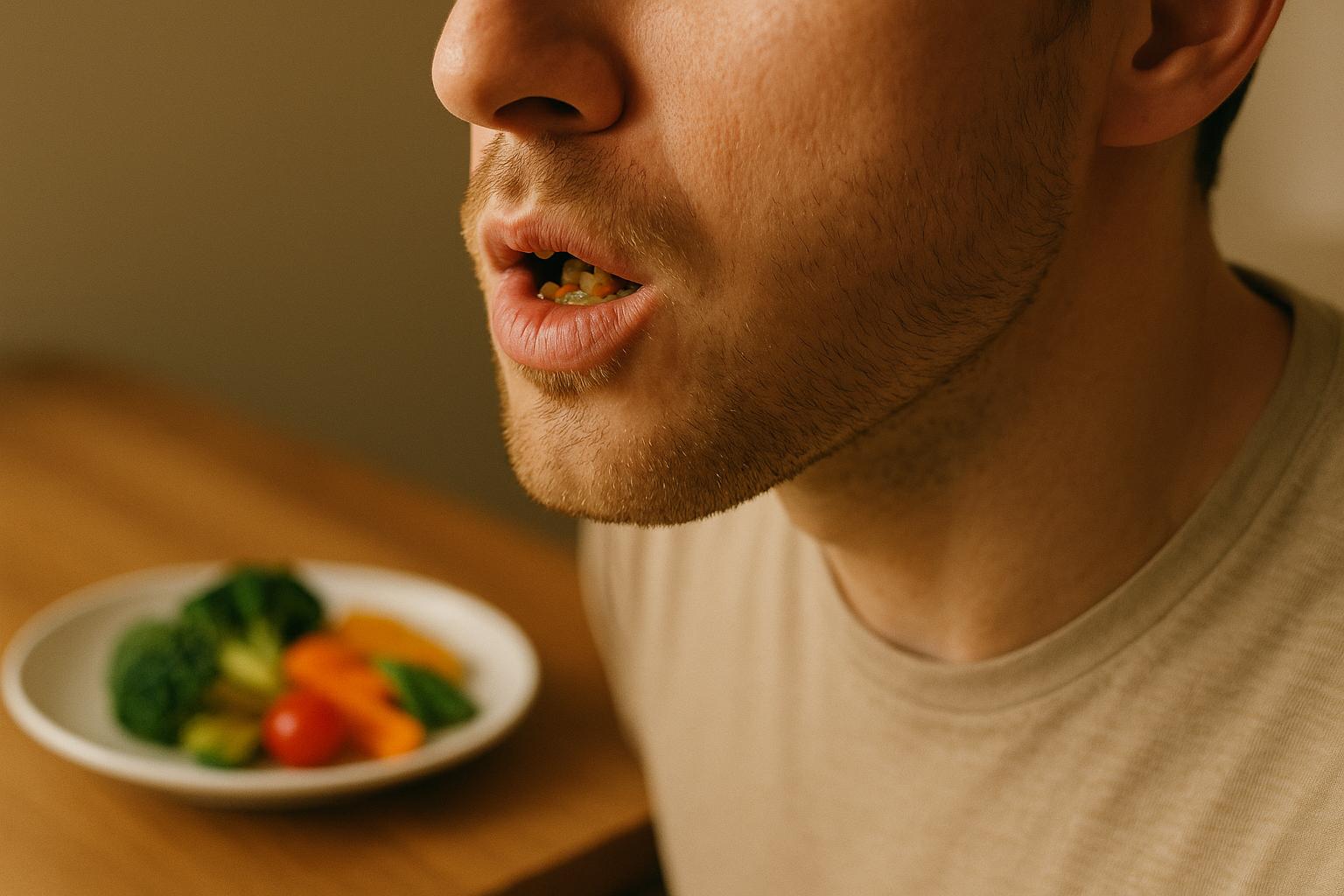
Counting your chews might seem tedious, but it’s a great way to make sure you’re breaking down food properly. Aim for around 30 chews per bite – 32 if you can manage it. This can make a noticeable difference in how your body processes food.
"On average, food should be chewed about 30 times before swallowing, [but the exact number] depends on the consistency of the food." – Johanna P. Salazar, MS, RDN, Registered Dietitian Nutritionist and Founder of Healing Nutrition
While chewing, keep your lips closed and use your tongue to move the food around, ensuring it’s broken down completely. Pay attention to the texture – each bite should lose its original texture before you swallow. Softer foods like bananas or cooked veggies may need fewer chews, but sticking to the 30-32 range works well for most meals.
In addition to counting your chews, you can take things a step further by practicing mindful eating.
Practice Mindful Eating Techniques
Mindful eating helps you connect with your food and makes the whole process more enjoyable. It also naturally slows you down, which is great for digestion.
One easy trick? Put your fork down between bites. This gives you time to savor the flavors and textures instead of rushing through your meal. Engage all your senses – notice the colors, shapes, smells, sounds, and textures of your food. This heightened awareness not only makes the meal more satisfying but also encourages you to chew more thoroughly.
Want to shake things up? Try eating with chopsticks or using your non-dominant hand. These small challenges can break automatic eating habits and make you more mindful of each bite.
"When you take time to experience your food through all your senses; taste (flavor), smell (aroma), sight (presentation), sound (of surroundings), and touch (movement of utensils and the feel of the food), you are likely to be truly nourished." – Deborah Kesten and Larry Scherwitz, Authors of The Enlightened Diet
Of course, the environment you eat in also plays a big role in how well you chew.
Set Up a Calm Eating Space
A peaceful, distraction-free environment can make a big difference in your eating habits. It helps you focus on your meal and naturally encourages better chewing.
Start by eliminating distractions: turn off the TV, put your phone away, and avoid multitasking like reading while eating. Dedicate a specific spot for meals, like your dining table, and avoid eating while standing or lounging on the couch.
Clear clutter from your eating area and arrange your seating to face something pleasant, like a nice view. Establishing a consistent mealtime routine – like sitting down with family for dinner – can also make eating a more mindful and intentional activity. Lastly, sit upright while you eat. Good posture not only aids digestion but also keeps you focused on your meal.
The idea is to turn mealtime into a calm, focused experience where you give each bite the attention it deserves. As Dr. Julie Taylor, MD, MPH, Functional Medicine Physician, puts it:
"If we realize how [our] system works when food is chewed properly, it might help us slow down and be more aware."
sbb-itb-f98f348
Extra Support When Better Chewing Isn’t Enough
Even with mindful chewing and a relaxed eating environment, digestive discomfort can still linger. This doesn’t mean you’re doing something wrong – it may simply point to deeper issues that need extra attention. Stress, age, medical conditions, or individual differences in digestion can all play a role in how well your gut functions. Addressing these factors, alongside improved chewing habits, often involves tackling enzymatic or microbial imbalances to support your digestive health.
Using Digestive Enzymes and Probiotics
While chewing is a vital part of digestion, sometimes your body needs a little extra assistance. That’s where digestive enzymes and probiotics come in. These supplements can step in when your natural digestive processes aren’t enough.
If your body struggles to produce enough digestive enzymes, supplements can help break down food more effectively, easing discomfort and improving nutrient absorption. Probiotics, on the other hand, work to maintain a healthy balance of gut bacteria. As Johns Hopkins Medicine explains:
"Probiotics are live organisms that make up the good bacteria in your gut. They help keep your digestive tract healthy, so they support the work your enzymes do. Unlike enzymes, probiotics do not have the ability to break down or digest food components."
This connection between probiotics and gut health is particularly crucial since nearly 80% of your immune cells are located in your gut.
For specific issues, targeted supplements can make a big difference. For example, lactase supplements can help those with dairy intolerance digest lactose more comfortably. Similarly, enzyme supplements designed to break down complex carbohydrates can provide relief for the 20% of people who experience gas-related abdominal pain. Timing matters too – taking these supplements just before meals can mimic your body’s natural enzyme production. However, keep in mind that over-the-counter enzyme supplements aren’t regulated by the FDA.
At DigestiveBoost, we stress the importance of choosing high-quality supplements that complement your improved chewing habits and promote overall digestive wellness.
Signs You May Need Additional Help
If discomfort persists despite better chewing, it might be time to dig deeper. While proper chewing is essential, ongoing symptoms often indicate issues beyond just breaking down food. For instance, if you’re dealing with symptoms of Irritable Bowel Syndrome (IBS) – like abdominal pain, cramps, gas, bloating, diarrhea, constipation, or mucus in your stool – chewing alone likely won’t resolve the problem. IBS affects an estimated 10% to 15% of adults in the U.S., with women being twice as likely to receive a diagnosis.
Certain warning signs signal the need for medical evaluation. These include fever, vomiting, rectal bleeding, severe pain, or major changes in bowel habits. Chronic digestive issues – such as frequent diarrhea, ongoing constipation, or alternating between the two – should also prompt a visit to a healthcare provider. Additional red flags include bloody stools, mucus in stool, difficulty controlling bowel movements, or a persistent feeling of incomplete evacuation. If gut pain lasts more than a few days, it’s time to consult a professional.
Sometimes, digestive troubles show up outside the gut. Symptoms like joint pain, chronic fatigue, loss of appetite, or unintentional weight loss should also be discussed with a healthcare provider. To help your doctor identify patterns and pinpoint the issue, consider keeping a symptom tracker. Documenting your symptoms and any related factors can make a big difference in finding the right treatment plan.
Conclusion: Better Chewing for Better Digestion
As we’ve explored, chewing is more than just a mechanical process – it’s the essential first step in digestion, setting the stage for everything that happens in your gut.
Thorough chewing stimulates saliva production, which releases digestive enzymes, and signals your stomach to produce hydrochloric acid – both crucial for breaking down food efficiently. These actions not only make digestion smoother but also contribute to a healthier gut overall.
The benefits go beyond avoiding discomfort like bloating or indigestion. Chewing properly can reduce bacterial overgrowth in the gut, enhance nutrient absorption, and even aid in managing weight by naturally encouraging smaller portions. For instance, research highlights that women who ate slowly consumed less food and felt fuller compared to those who ate quickly.
The best part? Improving your chewing habits doesn’t require expensive gadgets or complicated routines. Simple changes, like setting your fork down between bites, minimizing distractions during meals, and fully savoring the texture and flavor of your food, can make a big difference. These mindful practices also activate your parasympathetic nervous system, helping to reduce stress and support digestion.
For those looking to take their gut health further, DigestiveBoost provides science-backed tools like digestive enzymes and probiotics to complement mindful eating. Pairing better chewing habits with targeted digestive support can create a powerful foundation for optimal gut health.
Your digestive system works tirelessly for you. By focusing on how you chew, you give it the support it needs to function at its best – helping you feel healthier and more energized with every meal.
FAQs
How does chewing affect digestion and nutrient absorption?
Chewing plays a crucial role in kickstarting digestion. When you chew, food is broken into smaller pieces, which gives digestive enzymes more surface area to do their job. This makes it easier for your body to absorb nutrients. Plus, saliva – produced during chewing – contains enzymes that start breaking down carbohydrates right in your mouth, even before the food reaches your stomach.
If you rush through meals without chewing enough, larger food particles can make their way into your digestive system. This can lead to bloating, discomfort, or even reduced nutrient absorption. Over time, it might cause deficiencies in key nutrients. Simply slowing down and chewing your food thoroughly can make a big difference for your digestion, nutrient uptake, and overall gut health.
What digestive problems can happen if you don’t chew your food properly?
Not taking the time to chew your food properly can cause a range of digestive troubles, including bloating, gas, heartburn, and constipation. When you don’t break food into smaller pieces in your mouth, your digestive system has to work harder to process it, which can make nutrient absorption less efficient.
On top of that, larger chunks of food may ferment in your gut, leading to discomfort and problems like indigestion. Chewing thoroughly not only eases the digestive process but also helps your body absorb the nutrients it needs to support your overall health.
What are some simple ways to improve chewing for better digestion?
Chewing Habits for Better Digestion
Changing the way you chew can have a noticeable impact on your digestion and gut health. One simple practice is to chew each bite thoroughly – aim for about 20 to 30 times. Breaking your food into smaller pieces makes it easier for your stomach to handle and gives your saliva enzymes a head start in digesting your meal.
Another helpful tip is to embrace mindful eating. Put away distractions like your phone or TV and focus on your meal. Eating slowly and intentionally not only encourages proper chewing but also helps you recognize when you’re full, which can prevent overeating. Taking smaller bites not only simplifies chewing but also allows you to fully enjoy the flavors of your food.
These small, consistent changes can go a long way in supporting your digestive system and improving gut health over time.